
The best camping mat for wild camping in the UK
By George Terry · 11 July 2026 · 3 min read
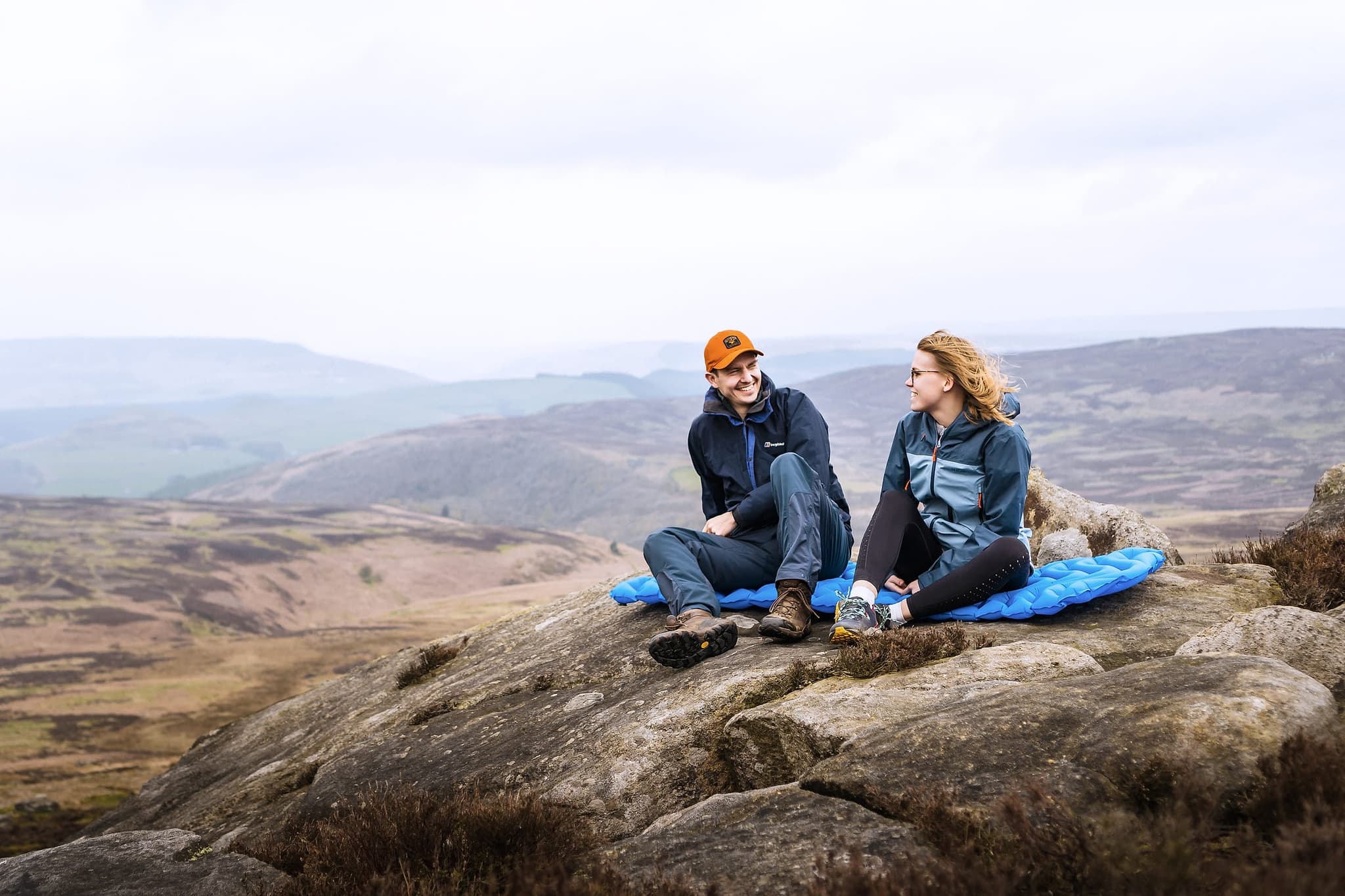
Wild camping in the UK asks more of a mat than a campsite ever will. You carry everything on your back, the ground is rarely flat, spring and autumn nights sit close to freezing, and there is no car boot to retreat to. The right mat is the difference between a night you remember fondly and a 3 am vow never to do this again.
The four numbers that matter
Ignore the marketing photos and read four figures on any spec sheet: weight, packed size, R-value and thickness.
- Weight. Under 600 g is genuinely ultralight for an insulated air mat. Over 900 g you will feel it on a long walk in.
- Packed size. Anything that packs smaller than a 1-litre bottle disappears into a 35 L pack. Bulky mats end up strapped outside, catching wind and rain.
- R-value. The insulation rating. Around 2 to 3 covers UK spring to autumn; 4 or more is winter territory. See our R-values guide for the full picture.
- Thickness. 5 cm or more keeps hips and shoulders off the ground for side sleepers. Thin foam mats transmit every stone.
The market, honestly summarised
Camping mats cluster into four camps, and each one is the right answer for somebody.
| Type | Typical weight | Typical price | Best for |
|---|---|---|---|
| Premium ultralight air | around 350 to 500 g | often £150 to £220 | Gram counters and winter campers |
| Mid-range insulated air | around 500 to 700 g | roughly £25 to £80 | Most UK three-season wild campers |
| Self-inflating | around 700 g to 1.5 kg | roughly £30 to £120 | Car campers who value simplicity |
| Closed-cell foam | around 300 to 500 g | roughly £15 to £40 | Bombproof backup or summer minimalists |
The premium American brands earn their reputation: mats like the Therm-a-Rest NeoAir range weigh around 350 g with winter-grade R-values. If you camp year-round including snow, that is where your money should go. The honest question for everyone else is whether you need winter insulation for three-season use, because that is mostly what the extra £150 buys.
Where ours fits
The DreamLite camping mat sits deliberately in the mid-range camp: 590 g, packs to 21 × 11 cm, 6 cm thick, R-value 2.5, with an inflatable pillow included rather than sold separately. It is designed for exactly the trips most UK wild campers actually do: spring to autumn nights on hills, moors and coast paths.
We will not pretend it is the mat for a January summit camp; at R 2.5 it is not. What we will say is that buyers on Amazon rate it 4.2 out of 5 across 78 ratings, several of them side sleepers and larger campers, and you can read every review including the critical ones before deciding.
The checklist before you buy
- Match the R-value to your coldest planned night, not your average one.
- Check the packed size against your actual rucksack, not the marketing photo.
- If you sleep on your side, treat 5 cm thickness as the floor.
- A repair kit in the box matters more than it seems. Gritstone and hawthorn do not care what you paid.
- Read the negative reviews of anything you shortlist. Patterns matter; one-offs do not.
Whatever you choose, buy once, look after it and get outside. The mat is only ever the means; the night on the hill is the point.
Written by George Terry, founder of Rambler Peak. Every product we sell is tested on the hills these guides are written about. Read the story.